

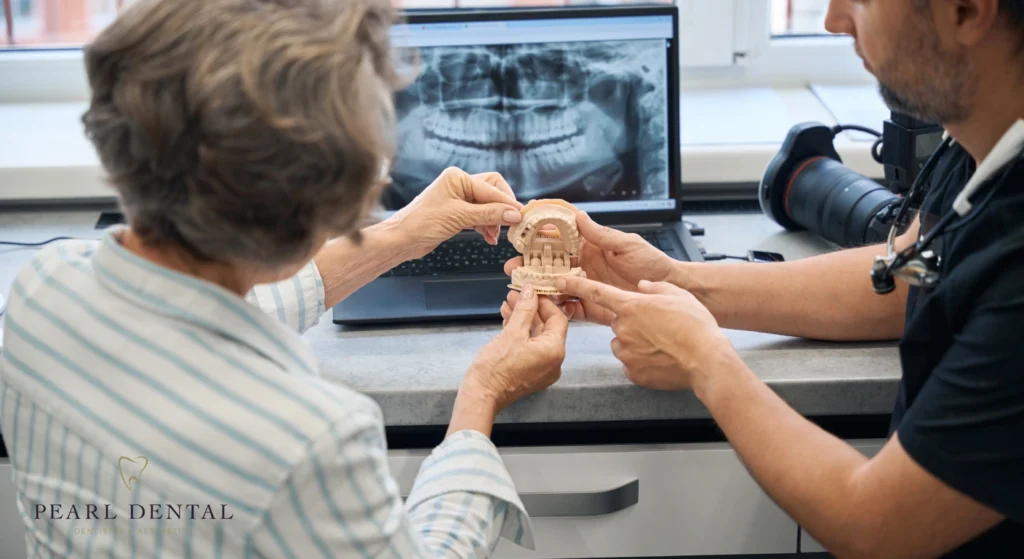
Dental implant surgery typically only takes between 1 to 2 hours, but the entire process, from the initial consultation to your crown being fitted, can take anywhere between 3 and 9 months, with the timeline depending on how complex your treatment is, and where the tooth or teeth are in your mouth. Our trained implant dentists at Pearl Dental in Bradford plan every case using 3D scans and X-rays, so you know exactly what to expect at each stage before treatment begins.
How does the dental implant procedure work?
During your dental implant surgery, your dentist will insert a small post, usually made of titanium, into your jawbone. Over several months, this will fuse with the bone, a process known as osseointegration. When the implant has fully fused with the bone, you will have your crown fitted.
A dental implant has three main parts. These are:
- The implant itself (a small post, usually titanium)
- The abutment, which attaches the crown to the implant
- The crown, usually made of porcelain
It is not normally possible to have a crown and implant fitted on the same day, although if you are having All-on-4 implants, it is possible to fit temporary restorations at the same time as your implants. This is why All-on-4 is also known as ‘Teeth in a Day’.
As with any surgical procedure, dental implants involve a recovery period. This is divided into two main phases, soft tissue healing and bone fusion (or osseointegration).
Recovery stages for dental implants side by side
| Stage | Soft tissue healing | Bone fusion |
| Timeline | 1 to 2 weeks | 3-9 months (sometimes longer) |
| What happens | The soft tissues around the implant site heal, closing the wound. | Bone cells grow, locking the implant in place. |
| Symptoms | Possibly some bleeding for the first few hoursSwelling and tenderness around the implant site (typically peaking around day 2-3)Possible discomfort which fades in a few daysNumbness around implant site, fading in 24-48 hours | No major discomfort – process hidden beneath gums |
| Care | Eat a diet of soft foods for the first few daysUse gauze for the first few hours after implant is placedUse over the counter pain relief if necessary, and any prescribed antibioticsUse the mouthwash advised by your dentistDo not touch the implant area with your tongue or fingersAvoid chewing on the side where the implant is placed | Avoid chewing hard foods on the implant site (especially early on)Avoid smoking and tobacco products Attend dental checkups or reviews Protect your teeth during strenuous exercise Avoid injury to the implant area |
Why do dental implants take a long time?
Although dental implant surgery is often a relatively short procedure compared to other procedures such as root canals, the overall process is usually lengthier, taking anywhere between 3 and 9 months from start to finish.
We know it can be frustrating to wait several months for an implant to heal, but our team takes the time needed to get the outcome right. Rushing the dental implants process could risk the success of the implant, and your overall health.
- Precise planning
Unlike many other dental procedures, implants are designed to be permanent. We are adding a new tooth or teeth to your mouth which may last 25 years or longer, so the process cannot be rushed. When you go for your initial consultation, we will take 3D scans and X-rays of your mouth, then take time to create a bespoke implant which will fit seamlessly into your smile.
- Making sure you’re in the best health
There are some circumstances where we may need to delay your treatment, or look into alternatives. If you suffer from gum disease, for example, we will help you to treat it before you have the implants.
We also strongly advise you to give up smoking before having dental implants, especially if you are a heavy smoker. This is because smoking can impede the blood vessels to your gums, lengthening the time it takes to heal and potentially putting you at risk of infection.
- Multiple implants
If you are having one, or just a few implants, the recovery time is often relatively short compared with other implant procedures. However, if you are missing several or all your teeth, it may take longer to plan the treatment, and longer for you to heal. However, with some implant types, such as All-on-4, you will get temporary teeth fitted at the same time as your implants, so you don’t have to go without teeth for long.
- Complexity of treatment
Depending on the position of your dental implant or implants in your mouth, your tooth might take a longer or shorter time to heal. Additionally, implants at the back of your mouth may be more complicated to place, so the surgery may take slightly longer.
In some cases you may need a sinus lift or bone graft. If your own bone is used for a bone graft, it will be taken from elsewhere in your jaw or another part of your body, so this may delay the healing process.
- Age and medical history
Your age and medical history can play a role in how long the dental implant process takes. For instance, if you have diabetes that isn’t well controlled, your risk of delayed healing or implant failure is higher, because high blood sugar impairs blood circulation, weakens the immune system, and disrupts bone fusion. Conditions that weaken bone, or medications like bisphosphonates (often prescribed for osteoporosis), can reduce the quality of your jawbone, sometimes making bone-grafting necessary before implant placement, which adds months to the overall process. Certain heart conditions and autoimmune disorders can also affect your overall healing capacity.
How do I make my dental implant heal faster?
After we’ve placed your dental implants, your dentist will provide you with detailed aftercare instructions to help them heal faster and prevent infection. It’s essential to follow these so that your implant can heal in time. There are a few other things you can do to help your implant heal properly and speed up the process, especially during the initial phase where the soft tissues are healing. These include:
- Do not disturb the implant site for the first week
While your implant is healing, a blood clot will form on the implant site, which should not be disturbed or touched for the first week, even to brush your teeth. Chew on the other side of your mouth to the implant, and do not explore the area with your tongue or fingers. After a week, you should be able to start cleaning your implant site again.
- Stick to a diet of soft foods at first
Placing too much pressure on your implant by chewing can interfere with the healing process. We suggest you eat a nutritious diet of soft foods for the first week. This can include soups, yoghurts, smoothies, mashed vegetables and so on. We also suggest that you avoid foods that are very hot or cold as this could cause some sensitivity around the implant site. After a week or two, you should be able to go back to your normal diet.
- Maintain excellent oral hygiene
Sticking to a good oral hygiene routine and using the mouthwash advised by your dentist will help your implant heal faster and prevent infection. This includes brushing your teeth twice daily with a soft-bristled toothbrush, flossing and/or using interdental brushes.
- Stay hydrated
In addition to other health benefits, keeping hydrated will help your body heal faster after a dental implant. Try to stick to still water if you can, and keep sparkling water to mealtimes.
- Protect your teeth with a mouthguard or gum shield
If you grind your teeth (bruxism) or play sports, this can risk disturbing the implant site. At Pearl Dental, we offer night guards from £275, while our sports gum shields start from £105.
- Take it easy as much as possible
Like any dental procedure, dental implants can take a while to recover from. As dental implants involve surgical procedure, make sure there is someone to take you home from the practice once your implants are completed, and take a day off work following the procedure. Resting properly will reduce fatigue and help you return to your normal activities as soon as possible.
When to visit a dentist after implant surgery
If you’ve had a dental implant, you’ll need to come and see us between 7 and 14 days later so we can remove any non-dissolving stitches and check that the gum is healing well.
Between 3 to 9 months later, we’ll check that your bone has fused with the implant well enough to fit your final crown. If everything has gone smoothly, we’ll fit your crown, either on the same day or on a separate appointment. During the healing process, and after your crown has been fitted, you should continue to attend any regular hygiene sessions and checkups, to ensure that we can spot and treat any problems early.
Most implant surgeries are successful and you should not experience any serious side effects. However, if you notice any of the following symptoms, we encourage you to book an appointment at our Bradford practice as soon as possible:
- Pain or discomfort that gets worse or does not improve over several days
- Uncontrolled bleeding from the implant site
- Pus
- Swelling that does not subside after 3 days
- A bad taste in your mouth
- A high fever
- Feeling that the implant is loose or shifting
With excellent oral hygiene, you are unlikely to experience any complications if you follow the advice from your dentist. Our dental team are trained and experienced across all types of dental implant treatment, and will ensure that you get the best possible care throughout your implant journey; most complications are easily treatable if they are caught early.
How long can I expect dental implants to take?
In short, most patients can expect it to take 3 to 6 months from consultation to final crown, with the surgery itself taking just 1 to 2 hours. The timeline varies based on your bone health, your medical history, whether you need a bone graft, and how many implants you are having; our Bradford team will give you a personalised estimate at your consultation so you know what to expect from day one.
Book a dental implant appointment with our implant specialists in Bradford